Female Hostility in Sports

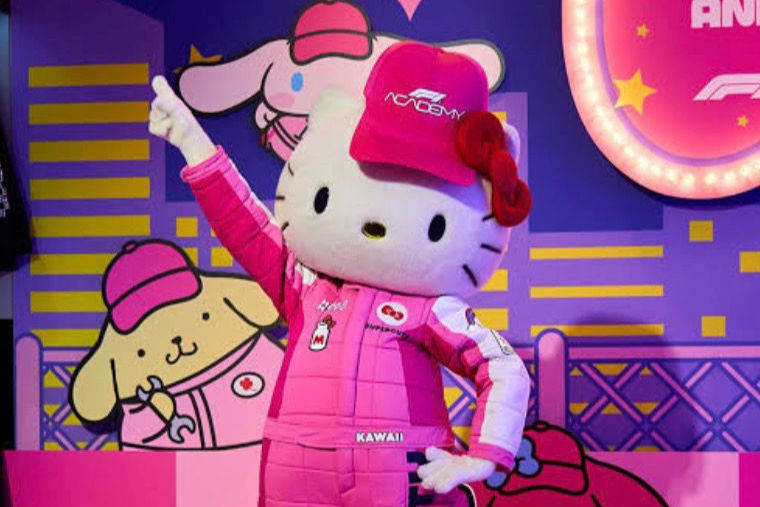
A few months after I started my motorsport-oriented social media accounts, I posted a video simply expressing my joy that a figure in a Lego set was a woman, something I hadn't known beforehand. What followed were comments like: "What do you even know about motorsport?", "Which women is that even supposed to represent?" or, my personal favorite, "You only watch it because the drivers are good-looking anyway." Reading these comments, it became clear to me: either I am considered too stupid to understand anything, or I am simply unwelcome here because of my gender.
As a teenager, there is no question you hate more than the usual: "What do you want to be when you grow up?" My answer changed constantly. Singer, architect, astronomer, teacher. Then, eventually, I found something that stuck: Journalism.
My father introduced me to the sport. I never thought I would one day love it this much. I grew up hating sports and doing everything in my power to avoid them. Football was terrible, basketball was boring, and motorsports were just cars driving in circles. Ironic, right? But here I am, an aspiring sports journalist. Theoretically, the job is simple: write well, be quick-witted, stay curious.
Except... not if you are a woman.
Because when you enter a typically male-dominated field as a woman, whether it’s politics or sport, it feels like trying to tear down a brick wall with a plastic spoon. A warm welcome? Nowhere to be found.
And as a girl who stands up and applauds the support and success of other women, I knew: if I can use this reportage to make the discrimination in my field visible, then you can be sure that is exactly what I will do.
One of those women I look up to, and who inspired me to write this report, is Aurora Straus. She is undeniably a very brilliant woman. Racing driver. Activist. Entrepreneur. Oh, and a Harvard graduate. Because well, girl boss, quite literally. A bit unique, clearly. Somewhere between defending building a race track and racing, Aurora always takes the opportunity to speak about the injustices women experience in sport. And that is exactly why I am quoting her own experiences:
For Aurora, it often feels like women in sport are an afterthought. Or even worse, objects to be sexualized or whose presence makes some uncomfortable. One of the most unbelievable stories remains that, during the filming of a documentary, she found inappropriate items in her car. Unbelievable. This reality has made her a strong woman who mentors other young and aspiring female racers. Aurora has sworn never to let such discrimination happen to the girls she mentors.
Even as she was growing up, the conditions were hardly better. There were almost never proper changing rooms for her. So, she changed next to the boys. And that is something many people treat as well, irrelevant.
"Oh well, it just happens."
Yes, exactly. It happens. And that is exactly the problem. And perhaps this needs to change.
If women are already receiving less attention and resources, the least we can do is finally listen to them.
And all that Straus and so many other women have had to fight against is also reflected in my own survey. I surveyed 100 women, making it my small case study on their everyday experiences in sport.
Let’s talk about the results and experiences that were sent to me.
My survey of 100 female respondents shows that most people participate in sport either as spectators or hobbyists. 63% stated that they follow sport live or via media, while 53% participate as a hobby. Only a small number participate at a competitive level or work in sport-related roles.
When asked about misogynistic behavior in sport, 93% stated they had experienced it themselves. The most common examples were comments or insults directed at women (77.1%), sexualization of female athletes (71.9%), and unequal treatment regarding resources or opportunities (51%). Many participants also noted a lack of respect for women's athletic performance and weaker media coverage of women's sports.
Media representation was another major concern. Almost half of the respondents (49%) stated that women's sport is reported significantly worse compared to men's sport, and 41% stated that the coverage is somewhat worse. Only a very small number felt that coverage is better or equal.
Despite these issues, there was strong support for equal pay in professional sport. 88% believe that male and female athletes should receive the same prize money and salaries if they perform at a similar level. Only a few disagreed or said it depends on the sport.
In my survey, where responses remain anonymous, many experiences emerged that are far too close to what I have already addressed.
(quotes have been reformatted, yet contextually still accurate)
An example? Resources for boys, crumbs for girls.
"In rugby, the boys got funding, trips, and new jerseys. The girls had to hold bake sales to afford a bus."
And that isn't just in one sport. Even in football, a world-famous sport, you stumble over the same problems.
"My brother could move up in the football league. I couldn't. Not because I was bad, but because the club didn't even bother to build a changing room for women."
And as if that weren't embarrassing enough, this pattern continues seamlessly into the media.
"I watched a male tennis player ranked 75th get a full media team and a perfect interview room. A top-15 female player had to sit at a plastic table in the loud hallway hours later and was first asked about her outfit."
Well, of course. Priorities.
You would think there was some logical explanation for why women systematically receive fewer resources and less respect. But if we’re honest, what can you expect when women are already sexualized just for existing?
"Our netball coach once said our dresses were shorter 'so that anyone would watch at all'."
Or: "I was 10 when a judge said in front of a thousand people that my horse could 'be happy to be ridden by me'."
Ten. Years. Old. No child should ever have to hear such comments, and certainly not in a room full of adults who simply stay silent.
The theme of "women can't do that much anyway" also seems to be immortal.
"My coach told me I was 'good for a girl' right after I scored the championship goal."
Or: "I was told girls shouldn't play cricket, the ball was 'too hard,' while I was simultaneously playing at the county level."
It seems as though the deliberate undermining of female achievement has become a national sport.
What can all this be traced back to? Old ideas that should have stayed with our grandparents.
From 'Go to the kitchen':
"A group of men told me I should stay in the kitchen instead of playing golf; it would make me a 'useful housewife'."
To 'Women should please be quiet':
"Female journalists, engineers, and even drivers are sexualized or devalued before they even open their mouths."
And of course, men who want to explain to women which sports are 'suitable for us.' Elegant. Delicate. Just nothing powerful.
Sounds almost as if someone is afraid that women might be better than them. Ego failure much.
One quote summarizes everything perfectly:
"It’s hard to think of just one incident when it happens so frequently."
And that leaves a question that burns uncomfortably:
Why do we treat women this way?
Why is this normal?
Why do we act as if female talent is a coincidence and not a fact?
Furthermore, this doesn't just affect the fans. Major companies like Sky Sports, which seem to play in every sports-loving household, spread these patterns of thinking as well. Recently, they created "Halo." The supposed 'little sister of Sky Sports,' which was meant to target a female audience.
Only, this attempt at a 'platform for women' backfired completely and ultimately just made us look more ridiculous.
The very idea of Halo was questionable enough, because women are constantly questioned about their place in sports anyway. But then they seriously made posts about Matcha, memes, and 'Hot Girl Walks.' It just felt... dystopian. And it made the presence of women in sport look more like a bad joke.
And surprise! Halo was discontinued pretty quickly.
Such poor decisions when it comes to representing women in sport are exactly the problem. Exactly what makes us 'different'. What gives us the feeling of not really being welcome.
Who says that women can't understand or enjoy sports media just because it’s supposedly 'made for men'?
I have decided for myself not to look away. To support women, to be loud, to be uncomfortable, and to make it clear to every athlete, regardless of gender, that they have a right to be seen, cheered for, and respected.
And I hope that this generation is finally the one that doesn't just demand change but enforces it.
I want to do my part. I want to fight until women in sport get exactly what should have always been theirs: equal treatment, respect, and a place on the podium.

Comments